Article content
Let’s address the elephant in the room. Everyone’s asking the same thing over their morning chai:
“Will AI take my job?”
You’ve seen the headlines. You’ve seen the memes. You may have even asked ChatGPT to write your resignation letter (just in case). But before you panic-buy a farm in Coorg and start growing avocados, let’s hit pause.
Because here’s the truth that no one’s telling you: AI won’t steal your job. Someone who knows how to use AI will.
And that’s both terrifying and thrilling, depending on what you do next.
Why This Question Matters (Especially for Creatives)
At Creative Code Productions, we thrive at the intersection of art and technology.
We’re storytellers who use pixels, motion, words, and music to make brands come alive. Corporate films, 2D explainers, product launches, and social videos are our daily playground.
And now, the playground just got upgraded with new equipment called AI.
From scriptwriting to video editing to animation, AI tools are changing the game faster than your client can say, “Can we have one more version by tomorrow?”
So yes, the question does matter, not just to coders and IT folks, but to every creator, marketer, and dreamer out there.
The Scary Part: Yes, Some Jobs Will Vanish
Let’s be real. Some roles will shrink.
The junior writer who spends hours writing product copy? AI can do that in seconds.
The motion-graphics artist who animates text for explainer videos? AI now auto-animates with presets that look pretty darn good.
The video editor is stitching interviews together. AI can find the best takes, sync them with music, and even color-grade them while you’re still finishing your coffee.
In short, the routine stuff is at risk.
According to the World Economic Forum, 40% of employers expect AI to replace certain job functions.
And yet, in the same report, over 60% of companies also said they’re hiring more people because AI opens up new kinds of roles.
Crazy, right? It’s not job destruction; it’s job mutation.
The Exciting Part: New Jobs Are Being Born
Here’s the silver lining: the people who adapt become super valuable.
The writer who learns prompt engineering and can guide AI tools to write smarter content? Priceless.
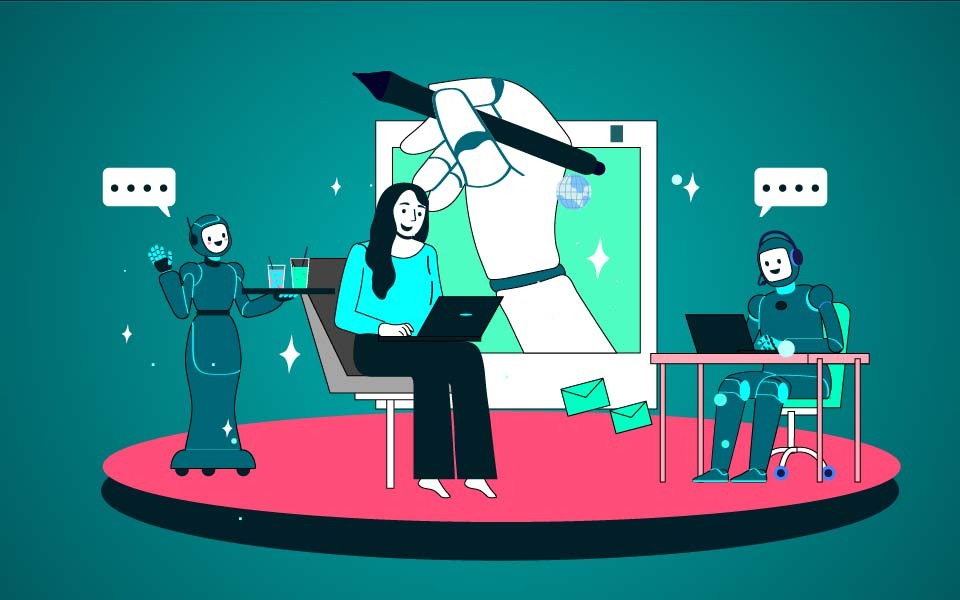
The animator who blends AI motion tools with human emotion and storytelling? Unstoppable.
The brand strategist who knows how to use AI for research, insights, and creative ideation? Irreplaceable.
Basically, the AI revolution isn’t a pink slip but rather a promotion opportunity.
Let’s Talk Real-World Examples
Take graphic design. Canva’s “Magic Design” lets anyone generate visuals instantly. Sounds like bad news for designers, right?
Except that clients still value taste. They still want a professional who knows why a certain layout works better and who understands tone, balance, and emotion.
Or look at marketing videos.
You can now use tools like Runway or Pika Labs to generate motion clips from text prompts. But can they capture the rustic warmth of a traditional Indian “Nazar Battu” motif the way a human-driven studio like Creative Code can?
Nope.
That requires cultural context, heart, and experience.
So, yes, AI can help you.
But it can’t be you.
The Game Plan: How to Stay Ahead of the Robots
Here’s how you future-proof your career (and your sanity):
1. Automate the Boring Stuff
If it’s repetitive, let AI do it. Think of it as your intern that never sleeps.
Use AI to write drafts, generate visual ideas, or automate edits, but spend your time refining, strategizing, and storytelling.
2. Master the Tools
Don’t run away from AI; befriend it.
Learn how to write prompts, how to use AI video tools, and how to integrate them into your workflow. The more fluent you are, the more valuable you become.
3. Double Down on What’s Human
Empathy. Emotion. Creativity. Brand voice.
These are things no algorithm truly understands (yet).
At Creative Code, we’ve seen that clients pay a premium for authenticity, the kind that only a human storyteller can deliver.
4. Market Yourself Differently
Don’t say “I’m a writer” or “I’m a designer.”
Say, “I create AI-powered stories that connect brands to humans.”
Sounds better, doesn’t it?
The Future Is Hybrid and That’s a Good Thing
By 2025, your job won’t be replaced by AI; it’ll be rewired by it.
You’ll spend less time on manual tasks and more time on creative thinking, client strategy, and brand storytelling.
And for studios like ours, that means projects get faster, smarter, and even more impactful without losing the soul that makes them human.
Because let’s face it, AI can create motion, but only you can create emotion.
The Creative Code Perspective
We’re not afraid of AI.
We’re embracing it as a creative ally, not a creative threat.
From using AI-powered storyboarding tools to generating smart production workflows, we’ve already started blending machine intelligence with human imagination.
And guess what?
The results are stunning.
Faster delivery, sharper ideas, and more time for what really matters: crafting stories that move people.
So if you’re a brand wondering how to navigate this new AI era, partner with people who get it. People who don’t just “use” AI but make it feel human.
Final Takeaway
AI isn’t coming to steal your job.
It’s coming to take away the boring parts of it.
And in return, it’s giving you something extraordinary, including time, creativity, and possibility.
The only question is:
Will you fight the future… or design it?